
Meriden Arrest History
Meriden Police Department is the main local arresting agency and custodian of its reports. Connecticut State Police and other agencies can create separate arrest records when they act within the city. Connecticut has no functioning county government, sheriff records unit, or county detention system. Requests must follow the agency that created the record.
An arrest record documents police action and station processing. It may show the alleged offense, release terms, or a court date. It does not show that the claim was proved. Prosecutors can file different charges, decline a case, or later enter a nolle. Courts can dismiss a count or find a person not guilty. Match any Meriden police entry to the later Judicial Branch disposition before drawing a conclusion.
Meriden Police Record Requests
The Meriden Police Records Division accepts written requests by email, fax, mail, or at the counter. No mandatory downloadable form was located. Give the incident number if known, event date and location, involved names, desired record type, and delivery choice. These details help staff locate the file but are not presented by MPD as mandatory form fields.
MPD Records Division
50 West Main Street
Meriden, CT 06451
203-630-6237
Counter: 10:00 a.m. to 4:00 p.m., excluding holidays
Email PoliceRecords@meridenct.gov or fax 203-630-6257. The official page lists additional staff lines. General city FOIA requests also have an OpenGov route. Its live fields were not documented, so do not assume it asks for the same data as a written police request.
Looking Up Meriden Arrests
There is no complete public Meriden booking-log interface. A channel-complete search moves from the arresting agency to court, custody, and repository records. Use the record closest to the event first.
- Check MPD's monthly news and statistics releases for aggregate data and selected event narratives. They are not full arrest rosters.
- Send a written request to MPD Records for the arrest or incident report. Ask what can be released and obtain a fee estimate.
- Search the Connecticut Judicial Branch criminal gateway for a pending case or conviction tied to the arrest.
- Use Connecticut DOC Inmate Search when the question is present state custody, then use SPBI for an official Connecticut history or self-review.
- If identity, format, or cost remains unclear, call the MPD records desk or submit the city OpenGov request. State Police incidents must be requested from DESPP separately.
Note: Save the incident or docket number and each source's as-of date when reconciling conflicting entries.
Meriden Arrest Disclosure Rules
Connecticut General Statutes §1-215 requires an arresting agency to disclose a basic arrest record despite parts of the investigative-record exemption. The public minimum includes the arrested person's name, address, occupation, and age; the arrest's date, time, and place; and the offense charged. The agency must also release at least an arrest report or news release, subject to other statutory protections.
When MPD withholds material, ask for the cited legal basis. A redacted record may remain available even when photos, witness details, medical facts, or active-investigation content cannot be released. The law creates access to basic arrest information. It does not convert accusations into established facts.
Inside a Meriden Arrest Record
MPD's selected public narratives show how a local arrest may be summarized. Entries can include event context, processing, charges, release instrument, bond, and warrant jurisdiction. A formal report can contain more, while protected parts may be redacted.
| Incident or arrest number | The agency key used to locate the police-created file. |
|---|---|
| Date, time, and place | When and where police report the arrest occurred. |
| Arresting agency | MPD, State Police, or another authority that created the record. |
| Charges | Alleged offenses at arrest, which can differ from charges later filed in court. |
| Release and bond | Written promise, non-surety bond, cash-or-surety bond, or a hold, when reported. |
| Booking photograph | Created during station processing, but not displayed in MPD's monthly reports; release depends on applicable law and redaction. |
| Next court step | Court location or appearance information when the public record provides it. |
A booking record may show age and identifying data. Use those details to distinguish names, not to republish private information.
After a Meriden Booking
An officer creates an arrest or uniform report, then transports the person for station processing, identification, fingerprints, and a photograph. Release may follow on a written promise, non-surety terms, or bond. Someone unable to meet release terms may remain held for court. Judicial Marshals take courthouse custody. A person committed by the court then enters the Connecticut DOC system.
Custody flow: Arrest › MPD Processing › Release or Court Hold › Judicial Marshals › DOC if Committed
No official source supports naming one prison as the automatic destination for every Meriden arrest. When court lockup is unavailable, state protocol can route a person to an appropriate community correctional center or nearby facility. Confirm current custody through DOC or the agency. DOC warns that accused people as well as sentenced people appear in its data.
Booking Logs and Recent Arrests
MPD publishes monthly “PD News and Statistics” PDFs instead of a complete searchable booking roster. The January 2026 report lists 1,908 calls, 152 arrests, 80 warrant arrests, and 14 DUI arrests. Its selected narratives illustrate bond and release formats, but they do not list every person arrested. Mugshots are not displayed.
These are dated operational counts, not convictions or a measure of any individual's history. December 2025 reported 195 arrests and 122 warrant arrests, which shows why a single month should not be treated as a trend. MPD is also rolling out Interactive Reports for calls for service. The accessible landing page does not support claims about exact filters, and calls for service are not the same as arrests.
Meriden Warrant Search Limits
The Judicial Branch maintains an official violation-of-probation, failure-to-appear, and orders-to-incarcerate lookup. It accepts at least the first two letters of a last name, a town choice that includes Meriden and South Meriden, or a court selection that includes GA 7 and New Haven Judicial District. A first name can narrow the result.
The title defines the limit. It is not a list of every arrest warrant or search warrant. Youthful Offender warrants are omitted, and entries may be withheld for safety. Other warrants can be sealed or absent until execution. A person resolving a possible warrant should confirm status and instructions with GA 7, the issuing court, counsel, or MPD. Do not act against a person based on a portal result.
Official Meriden Custody Sources
The DESPP reports and records hub handles State Police material separately from MPD.
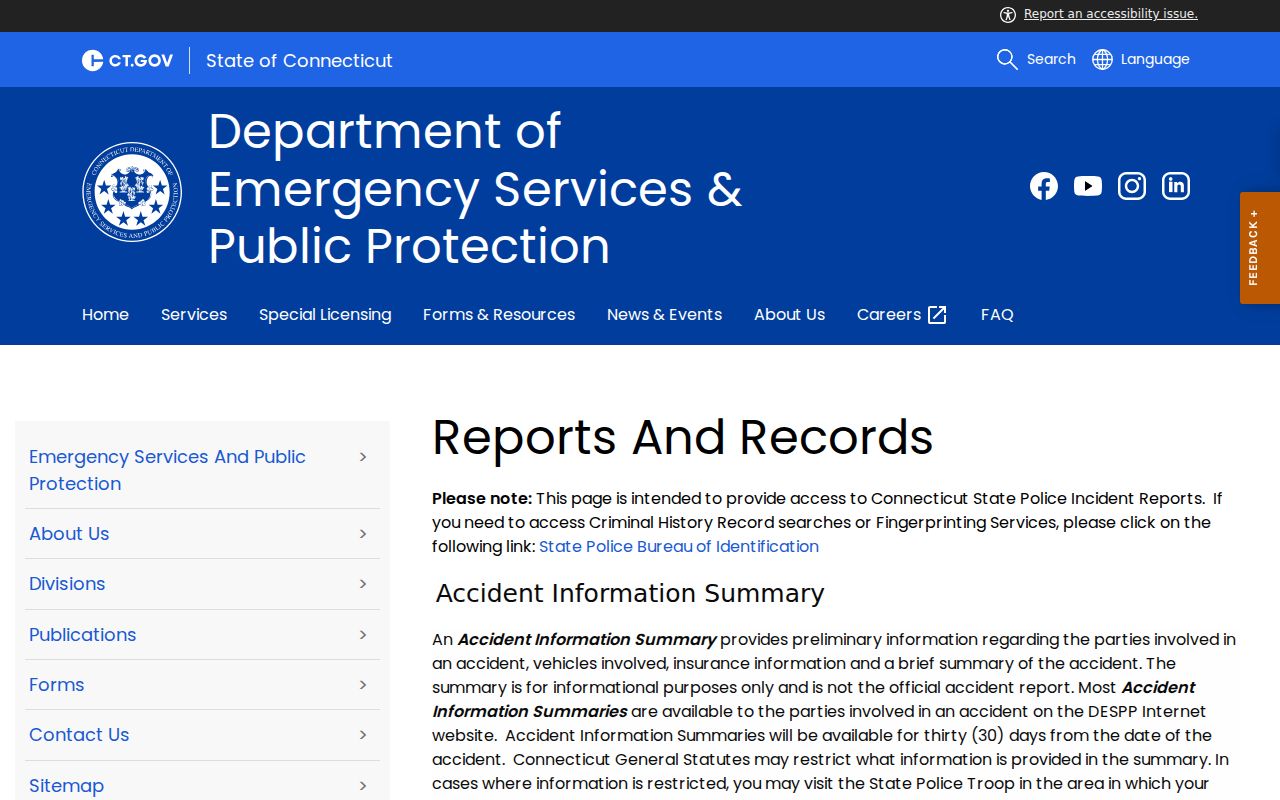
The arresting agency remains the proper first source for its own report.
The DOC inmate information page explains the state custody search.
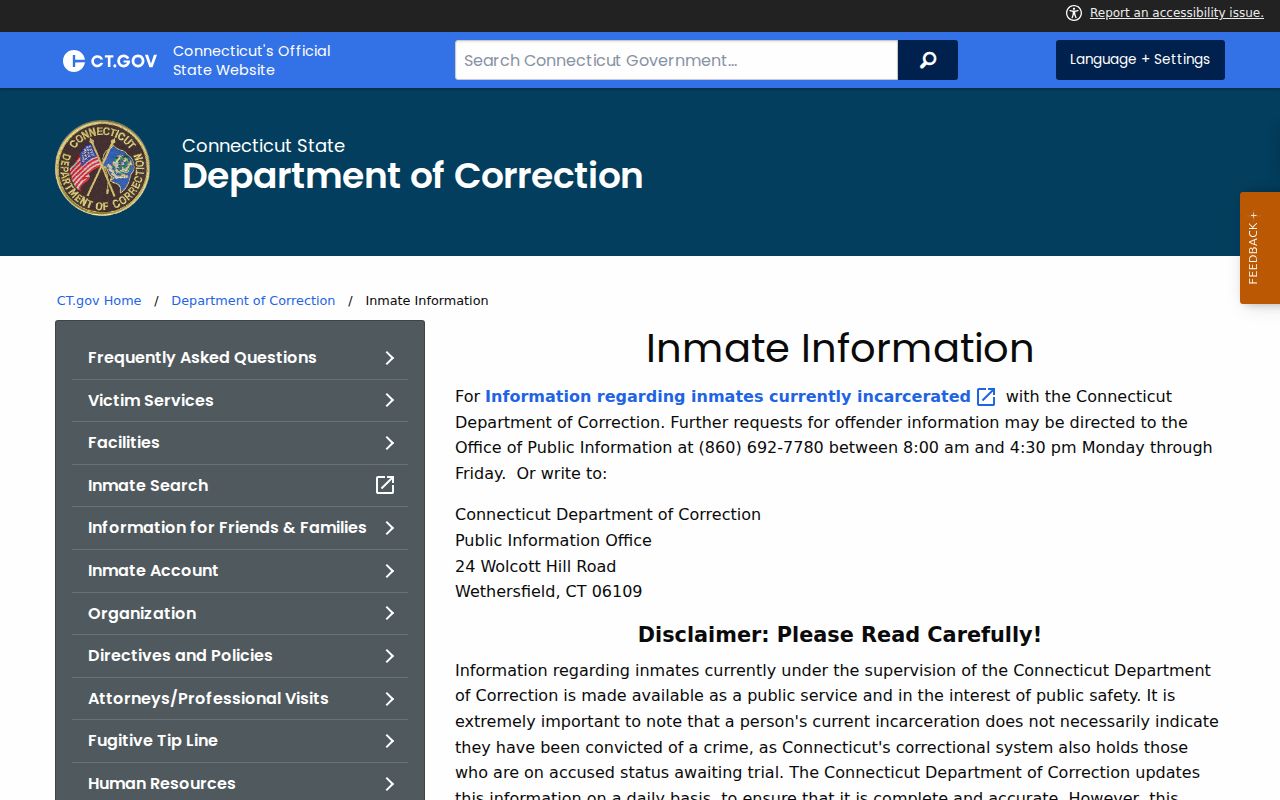
A DOC result answers custody questions, not whether guilt was proved.
DOC's official record guidance describes its data limits.
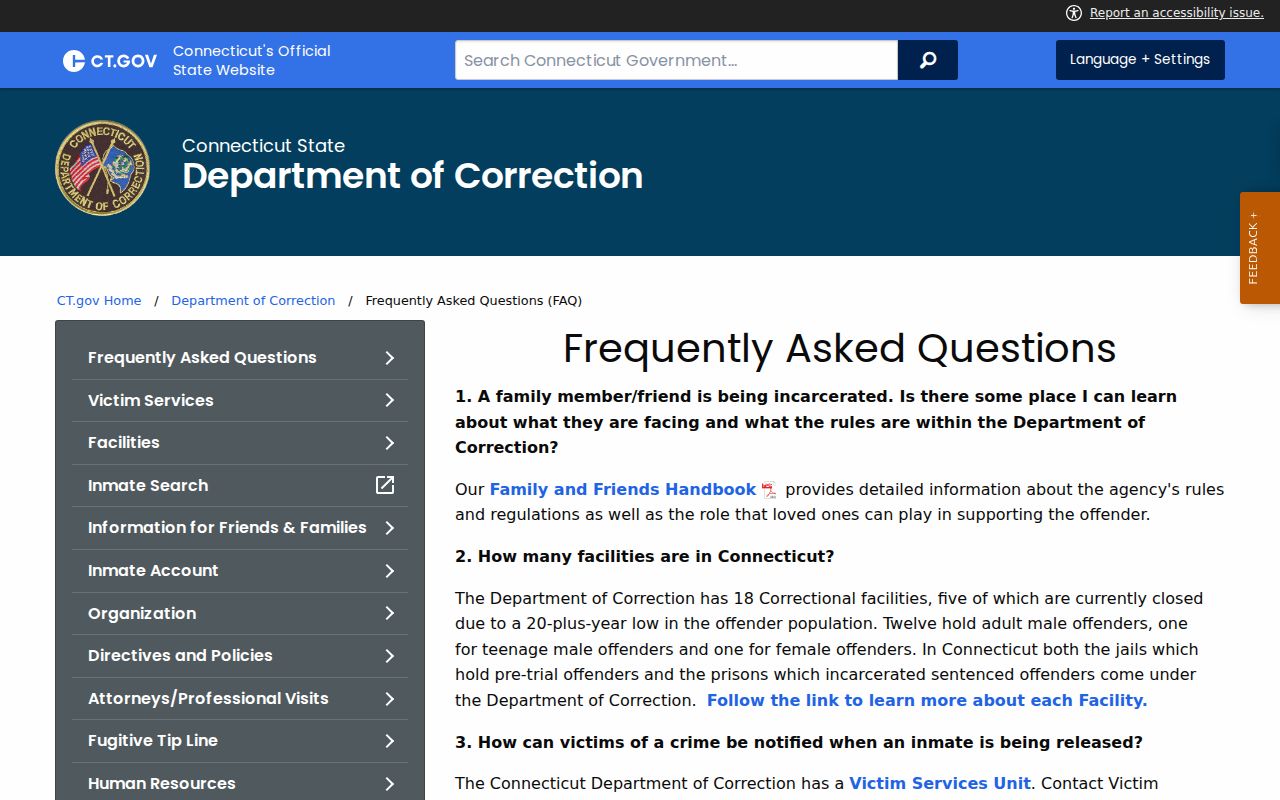
Status can change after the nightly feed, so direct confirmation may be needed.
Meriden Custody Notifications
The DOC Victim Services Unit connects users with CT SAVIN and VINELink notifications.
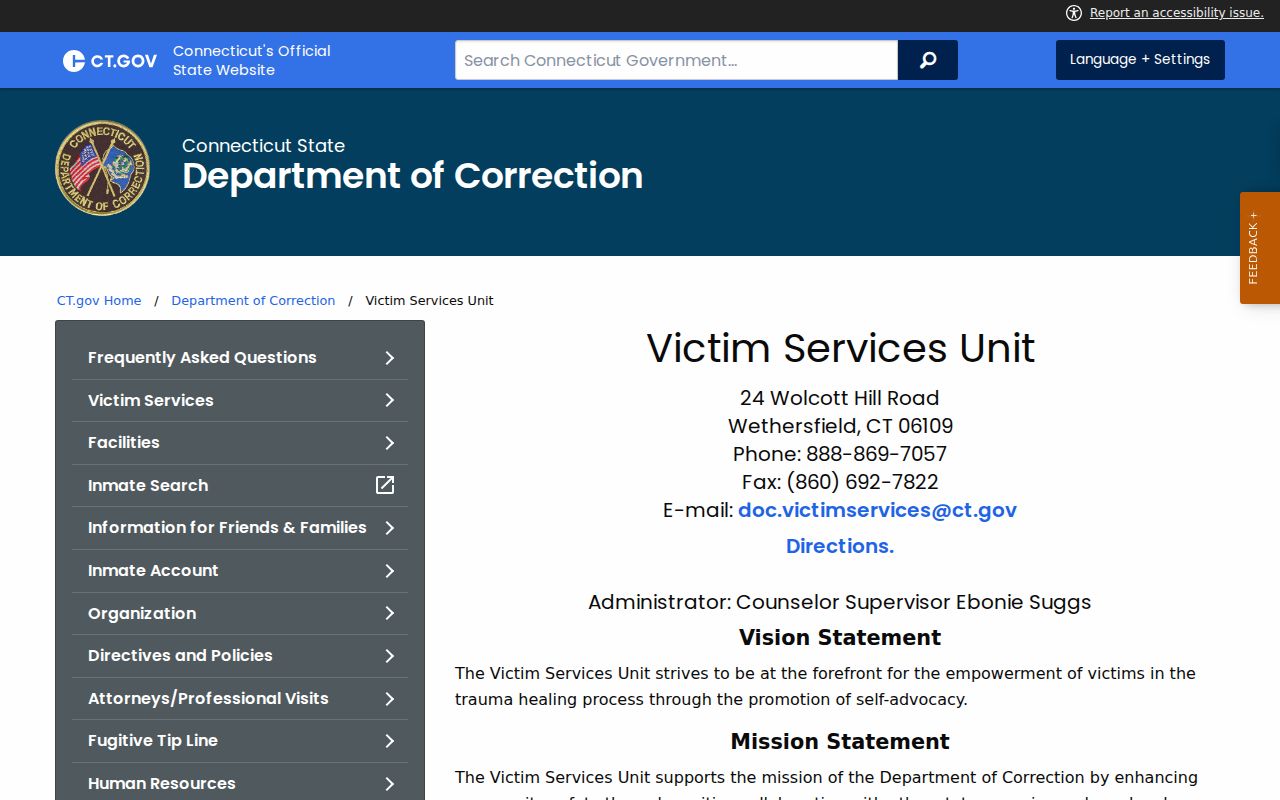
Users must register under both “Offenders” and “Offenders with court cases” to receive DOC and court-event notices.
The Judicial Branch warrant tool covers only the categories named on its page.
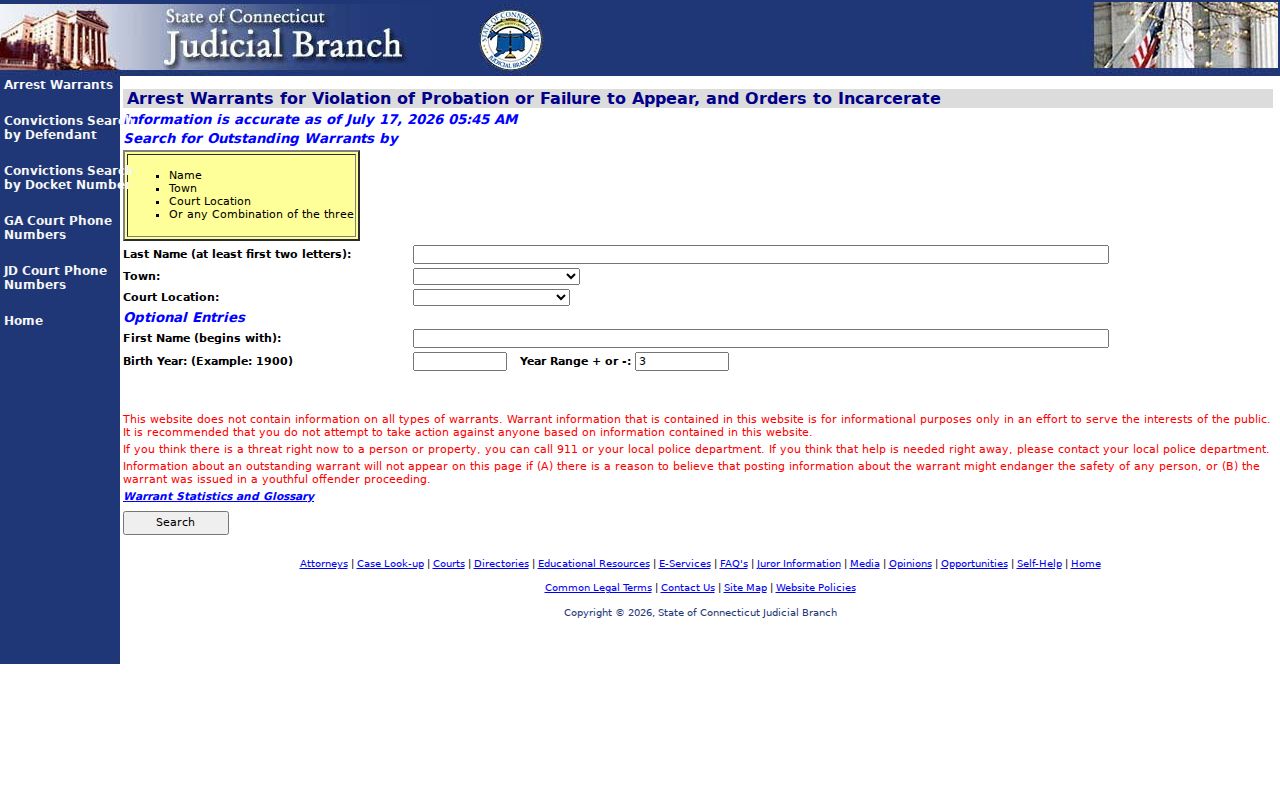
MPD or the issuing court must confirm warrant types and current status outside that narrow index.
Arrests Are Not Convictions
The police agency creates the arrest record. The Superior Court creates the case docket and final disposition. SPBI compiles qualifying statewide history from contributing agencies, but fingerprints provide the strongest identity match for self-review. Comparing these products prevents an old allegation from being mistaken for a court finding.
A name and date-of-birth search can confuse people with similar identities. For a review of one's own Connecticut history, fingerprints provide the stronger match. If a Meriden arrest has no visible outcome, use the incident number with MPD and the docket number with the clerk. Ask which arrest and disposition each office contributed. A DOC custody result also needs context because the department expressly includes both accused and sentenced people in its public data.
| Arrest Record | Conviction Record |
|---|---|
| Created by MPD or another arresting agency | Created by the Connecticut Superior Court |
| Shows that police recorded an arrest | Shows a guilty disposition on a filed charge |
| Requested from the arresting agency | Found through court indexes, the clerk, or SPBI |
| May end with release, no filing, dismissal, or acquittal | May lead to sentence, appeal, pardon, or qualifying erasure |
A dismissal, not-guilty result, or qualifying nolle can lead to erasure under §54-142a. A stale outside copy should be checked against current court and SPBI records.
Connecticut's rule is concrete. A final not-guilty result or dismissal is erased after the appeal period or final appeal, while a nolle ordinarily reaches erasure after thirteen months. Qualifying pardon and Clean Slate relief can also alter what remains public. Verify the current court result first, then compare it with a new SPBI response. If an outside copy still displays erased Meriden information, retain the official updated records when asking its holder to correct the stale entry.
Police and court dates can legitimately differ. The arrest date marks police action. The filing date marks the court case, and the disposition date records the judicial outcome. Charges can also change between those points. Compare by incident number, docket number, identity fields, and offense facts rather than assuming two records conflict merely because their labels or dates do not match.
Note: An arrest is not proof of guilt, and many arrests never result in a conviction.