
Sex Offender Checks in Meriden
The Connecticut Sex Offender Registry is the controlling public source for a Meriden search. The Connecticut Department of Emergency Services and Public Protection, Division of State Police, maintains it statewide. Meriden does not publish a separate city registry, and Meriden Police is not a substitute search database.
Start with the question the search should answer. A name search is best when the person's identity is known. City, ZIP, address, radius, map, or list controls are better for lawful neighborhood awareness. Similar names and changed addresses make a single field a weak identity match. Review aliases, physical details, photograph, address information, offense, conviction date, and status together.
Meriden Uses the State Registry
Connecticut centralizes registration data at DESPP. That choice matters in Meriden because a city boundary is only a search filter, not the limit of the registry. A person may live, work, attend school, or move across nearby municipalities, while the state record remains the official public source.
The DESPP registry program is also the proper official channel for program information and suspected registration noncompliance. Report a concern to law enforcement or DESPP. Do not approach a listed person, investigate a residence, or publish private details.
DESPP also manages address verification, photographs, and change reporting under General Statutes §54-257. Section 54-258 governs public availability. Those state duties explain why a Meriden Police incident report, a CT DOC custody result, and a registry profile are not interchangeable. The police file describes a local event, DOC reports state custody, and the registry publishes only the registration information that Connecticut law permits. A reader who finds conflicting address or status details should note the official record date and contact the maintaining agency. Reposting an older screen does not correct the underlying state entry.
How to Search the Connecticut Sex Offender Registry
The registry offers several routes, so choose the narrowest field that fits the safety question. Record the portal's current wording and as-of context because controls and public entries can change.
- Open the official Connecticut registry and read its terms and statutory warning before searching.
- Enter a name when identity is known, or select Meriden, a ZIP code, or an address-based route for a place search.
- Use map or list results to identify possible records, then open the complete profile instead of relying on a marker.
- Compare aliases, photograph, physical description, address, offense, conviction date, and registration status before treating two records as the same person.
| Search control | Type | Required | How to use it |
|---|---|---|---|
| Last and first name | Text | Optional route | Use legal spelling; check aliases on the profile. |
| City or town | Place filter | Optional | Select Meriden for city-focused results. |
| ZIP code | Text | Optional | Narrows a geographic search. |
| Address | Text | Address route | Supports a proximity or map search when offered. |
| Radius | Select | Address route | Use only the distances currently offered by the portal. |
| Map or list view | Display control | Optional | Switches between geographic and result-list views. |
Meriden Name and Address Searches
Name and address searches answer different questions. The name route looks for a known individual and works best when aliases and identifying features can be checked. An address or radius route supports awareness around a specific place, but its map marker should not be treated as a measure of current conduct or future risk.
| Route | Best starting fact | Main limit |
|---|---|---|
| Name search | Correct spelling or known alias | Common names can produce uncertain matches. |
| Meriden filter | City connection | It does not cover nearby towns or every out-of-state duty. |
| Address and radius | A specific place | Distance is not a prediction of behavior. |
For a move, travel route, or cross-border question, expand the geography. An empty city-filter result is not a universal clearance.
Inside a Registry Profile
A Connecticut profile combines identity, location, offense, and duty information that state law authorizes for public display. Fields vary because the governing statute and the underlying individual record differ.
| Name and aliases | Published identity and alternate names supported by the registry record. |
|---|---|
| Photo and description | Current photograph when available, physical traits, and identifying marks. |
| Residence information | Address information to the extent Connecticut law authorizes public release. |
| Offense record | Offense and statute, conviction date, and victim-age category when lawful. |
| Registration status | Public duty or compliance information maintained by DESPP. |
| Other fields | Vehicle, school, supervision, or related fields only when law and the record support them. |
Read the labels literally. A conviction field describes a past case. A registration field describes a legal duty. Neither supplies a clinical risk assessment, and a profile does not prove new misconduct.
Expand a Meriden Search With NSOPW
Meriden sits within a mobile central Connecticut region, so a state-only query may be too narrow for some safety questions. The U.S. Department of Justice operates the National Sex Offender Public Website, which searches participating jurisdictions through one official interface.
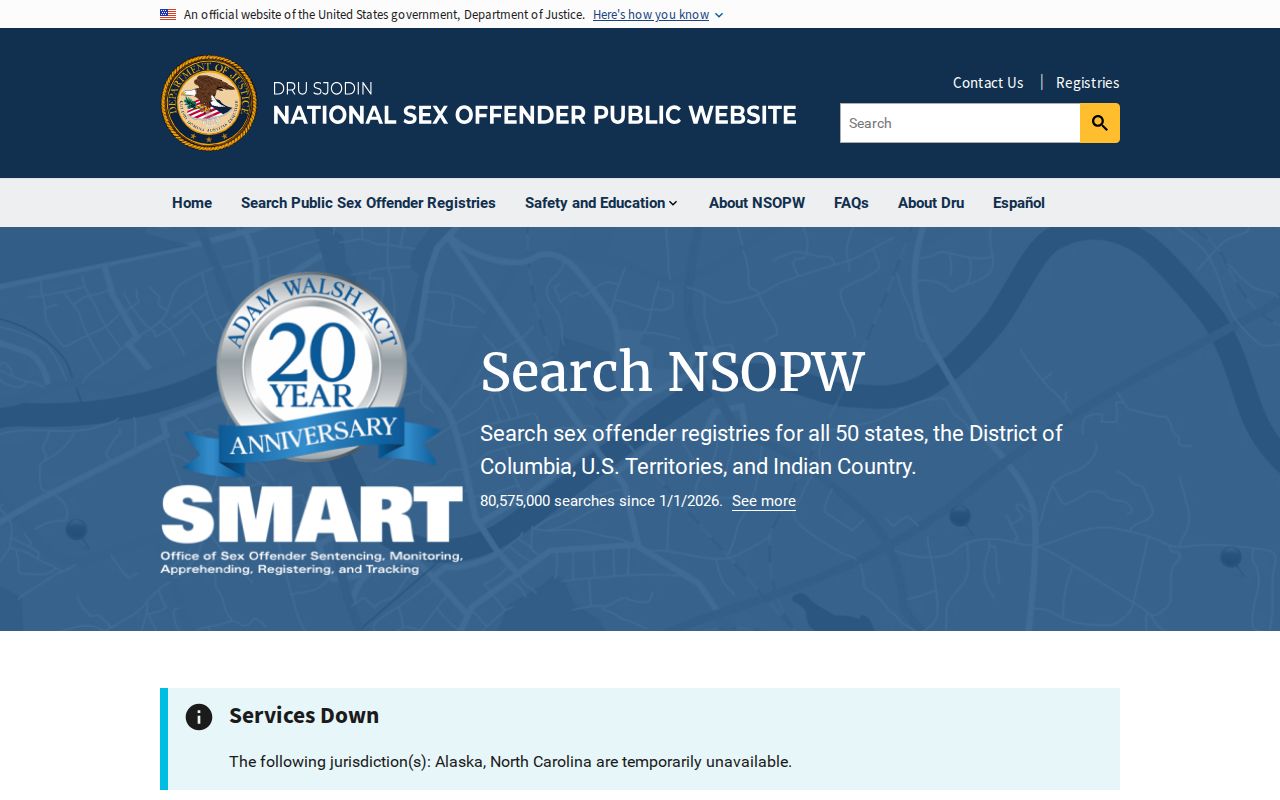
The national interface adds geographic reach, while the Connecticut profile remains the best source for Connecticut-specific labels and public details. Differences can reflect timing, jurisdiction rules, or restricted dissemination, so confirm questions with the registry agency rather than assuming one screen is complete.
Connecticut Registration Levels and Requirements
Connecticut does not place every public profile into a simple consumer-facing Tier 1, Tier 2, or Tier 3 chart. Registration is offense and category based. Duration, public visibility, and reporting duties depend on the statute, offense date, prior qualifying convictions, and court findings.
| Statutory category | General duration | Public visibility and duty |
|---|---|---|
| Offense against a minor or nonviolent sexual offense, §54-251 | Commonly ten years | Prior convictions or specified aggravated facts can result in lifetime duty. |
| Sexually violent offense, §54-252 | Generally lifetime | DESPP administers verification, updates, and lawful publication. |
| Out-of-jurisdiction conviction, §54-253 | Depends on the qualifying duty | Connecticut applies its statutory registration rules after entry into the state. |
| Specified felony for a sexual purpose, §54-254 | Generally ten years | Lifetime duty can apply when statutory or court criteria are met. |
Section 54-255 can restrict public dissemination for some registrants. A statutory duty and a public web listing are therefore not always identical. Verification details also belong to DESPP, so do not invent a reporting schedule from a generic national tier chart.
Meriden Registry Duration Is Case Specific
Offense date matters because Connecticut law has changed over time and the correct statutory category controls. A ten-year period should not be assumed for every nonviolent label, and lifetime registration should not be inferred solely from a profile's wording. Prior qualifying convictions, release date, out-of-state history, and findings made in court can change the result.
A reader trying to understand a duty should identify the conviction statute and date, then consult the current registration chapter and the court record. The public profile is a safety notice, not a complete legal file. DESPP can address registry administration, while the Connecticut Superior Court record supplies the conviction and relevant orders.
Meriden Registry Duties Under Chapter 969
Connecticut's official registration and public-availability laws set the duties that DESPP administers. The chapter covers who must register, changes of address and identifying information, verification, public dissemination, restricted disclosure, and misuse of published data. It is the right source when a general portal label does not explain why a record is visible or how long a duty may last.
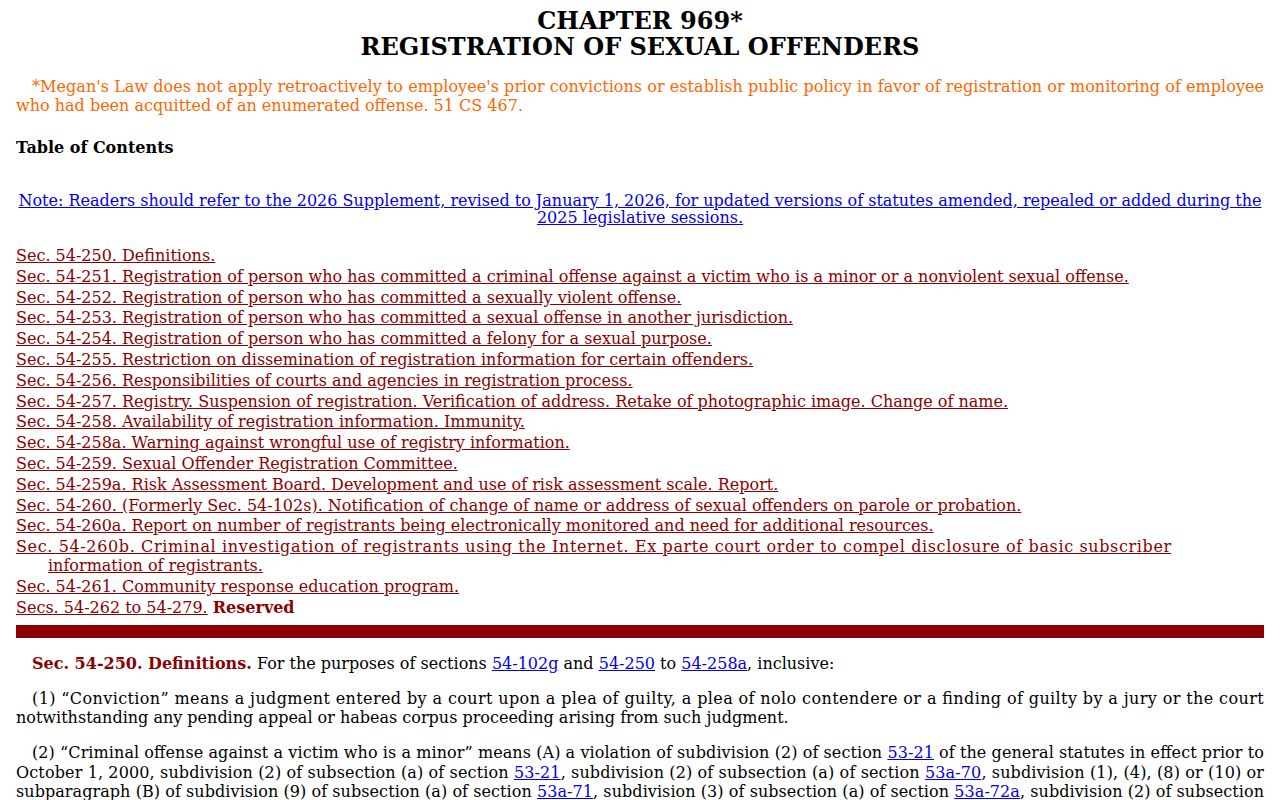
The statutory text also shows why broad tier shortcuts fail in Meriden. Separate sections address offenses against minors, nonviolent sexual offenses, sexually violent offenses, out-of-state convictions, and felonies committed for a sexual purpose. Court findings and prior convictions can affect the result. For a personal legal question, use the actual conviction record and current statute rather than estimating from a public search result.
An Empty Meriden Result Has Limits
No result can mean the spelling, alias, city, ZIP, or radius was too narrow. It can also reflect a move, a data update, restricted public dissemination, or a duty that is not publicly displayed in the way a searcher expects. Absence from the Meriden filter does not prove absence from every Connecticut or national registration system.
Try a careful second search with a known alias or broader geography, then use NSOPW when another state may matter. Check the profile rather than relying on a map pin or short results row. A residence change, alternate name, or limited public dissemination can affect what the first query shows. For a specific suspected violation, preserve the details and contact DESPP or police. Do not use repeated searches to track, visit, or confront a person.
Community Notification and Lawful Use
The registry exists for lawful public-safety awareness. Families may use it to understand published information near a place, confirm a known profile, and plan sensible precautions. The record should be read with its official labels and limits, never converted into a prediction of current behavior.
Use registry information lawfully: Connecticut General Statutes §54-258a warns that using registry information to injure or harass someone, or to commit a crime, can lead to criminal prosecution. Report suspected noncompliance to law enforcement or DESPP and do not confront the person.
Threats, intimidation, surveillance, and vigilantism put people at risk and can undermine a valid investigation. When immediate danger exists, call emergency services. For a nonurgent registry question, use the official DESPP program channel and provide facts rather than speculation.